"The power of the waves shakes the ground" - Oyster Jim
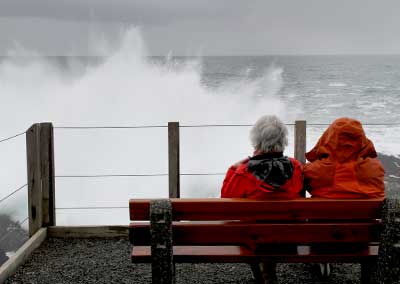
This is the CORRECT way to watch waves -- please stay off the rocks! Enormous breakers pound the coast, sometimes sending waves right into the trees.
What to bring
- Pack to dress in layers. During the winter, it is most often warm, but can become colder when the skies are clear. Carry a warm layer like a fleece jacket plus a wind/rain shell such as a poncho or rain slicker.
- A water bottle and a day pack to keep your camera and binoculars dry is a good idea.
- STURDY shoes not afraid of puddles! Locals favour "gumboots". The gravel trail stays remarkably dry under foot but in a heavy rain you will prefer dry feet.
- A rain slicker is practical, umbrellas are often toys for the wind! Some resorts lend rain gear.
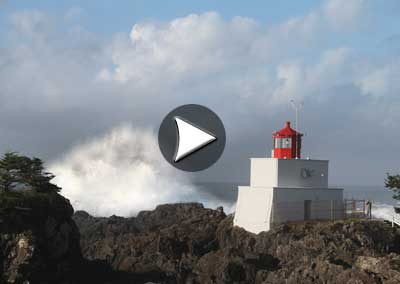
Click here for a Live Web Cam of the lighthouse
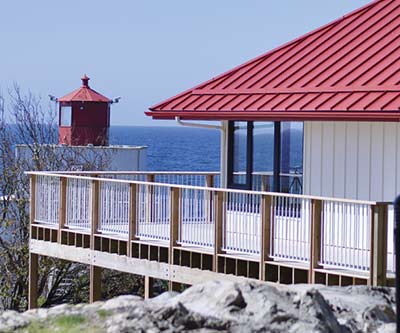
Visit our new Amphitrite House Interpretive Centre for a sheltered front row seat to crashing waves.
Storm Watching
The Wild Pacific Trail offers matchless viewpoints for dramatic storms
The west coast of Vancouver Island has a reputation for large waves and hurricane force winds. Please respect this deadly force and stay on trails. Do not follow people into dangerous exposed rocks, this area is not safe. Respect any closures due to high winds or waves. Watch your footing, rain erosion may create a trip hazard.
Waves weigh 1 tonne per cubic metre, stay on trails for photos.
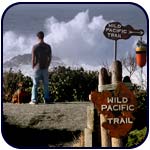 Waves can be high any time of year, but are most common from October to April. STAY ON THE TRAIL: waves are faster and stronger than any mortal! Bare rocks along the coastline are swept clean of plants by the powerful surf. It is not safe to walk on the rocks or on beaches during storms, even on calm days waves can surprise you.
Waves break more dramatically on rocky headlands or reefs. SAFE viewing spots are the Amphitrite Lighthouse and countless coastal over-looks along the trail. The trail will be closed in extreme winds due to risk of trees falling. Oceanfront resorts and restaurants also offer cozy viewing no matter how wild the storms may grow.
Above video captures a particularily large storm in 2018. If storm watching (or surfing) is your objective, this Wave Model Website will predict the height of waves up to a week in advance.
To learn more visit COAST SMART for videos and interactive quizzes.
Trip Advisor review: "We visited the lighthouse on a stormy afternoon and were virtually blown off the sidewalk. The most spectacular view of waves crashing onto the shore. We did the short trail 2.5 km was just right for our senior legs."
Snow, weather and travel conditions
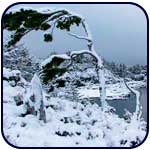 Mild temperatures can be expected year-round. It is very unusual to experience extreme cold or snow on the coastline, but winter snow is common inland, especially on the mountains.
Highway 4 crosses a scenic mountain pass that can become slippery during heavy snow. Check this Webcam for current conditions. Good winter tires or chains are required during winter months. Construction delays are also possible.
Winter weather on the Wild Pacific Trail is usually a cycle of a few days of warm wet weather followed by a few days of sunny cold conditions. The strongest winter storms often arrive from the southwest. Locals refer to this weather as a "Pineapple Express" because these warm winds arrive from Hawaii.
The entire trail enjoys a dense rainforest canopy providing a natural umbrella in any weather.
Thanks to our donors
Generous donations from over 50 donors and support from the District of Ucluelet funded extensive repairs after January 2018's storm damage. Two decks and two bridges were replaced. Special thanks to Oyster Jim Martin and Danielle Francis for their extraordinary skills in rebuilding trails.


Ucluelet's Wild Pacific Trail
Photos | Wildlife | Storms | Kids | Rainforest | Green Building Practices | Links | History | Oyster Jim | Map PDF | FAQ's |EMAIL
Report errors to Schramm Design — Website is copyrighted, no images can be used without written permission. Site updated 2026.